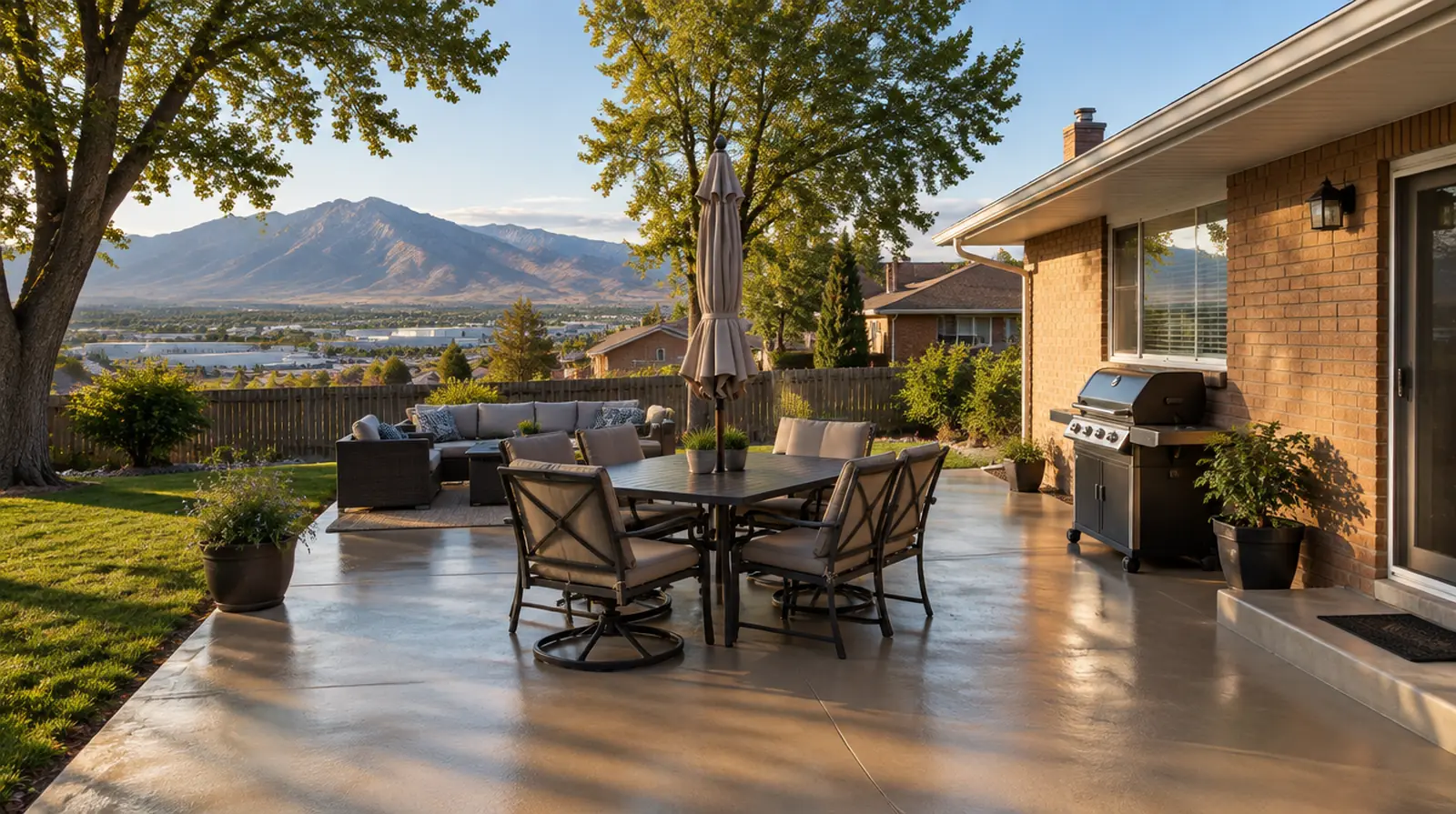
Why outdoor concrete breaks down
Concrete absorbs water. When it freezes, it expands and breaks small pieces off the surface. Deicing salt makes this worse by drawing in more water and adding chemical stress. Over time, steps and walkways show scaling, pitting and flaking. Sun fades colored and stamped concrete.
What sealing does
Sealers reduce how much water and salt can enter the concrete. Penetrating sealers soak in and protect from within while keeping a natural look. Topical sealers form a film that enhances color and adds sheen.
Steps and walkways
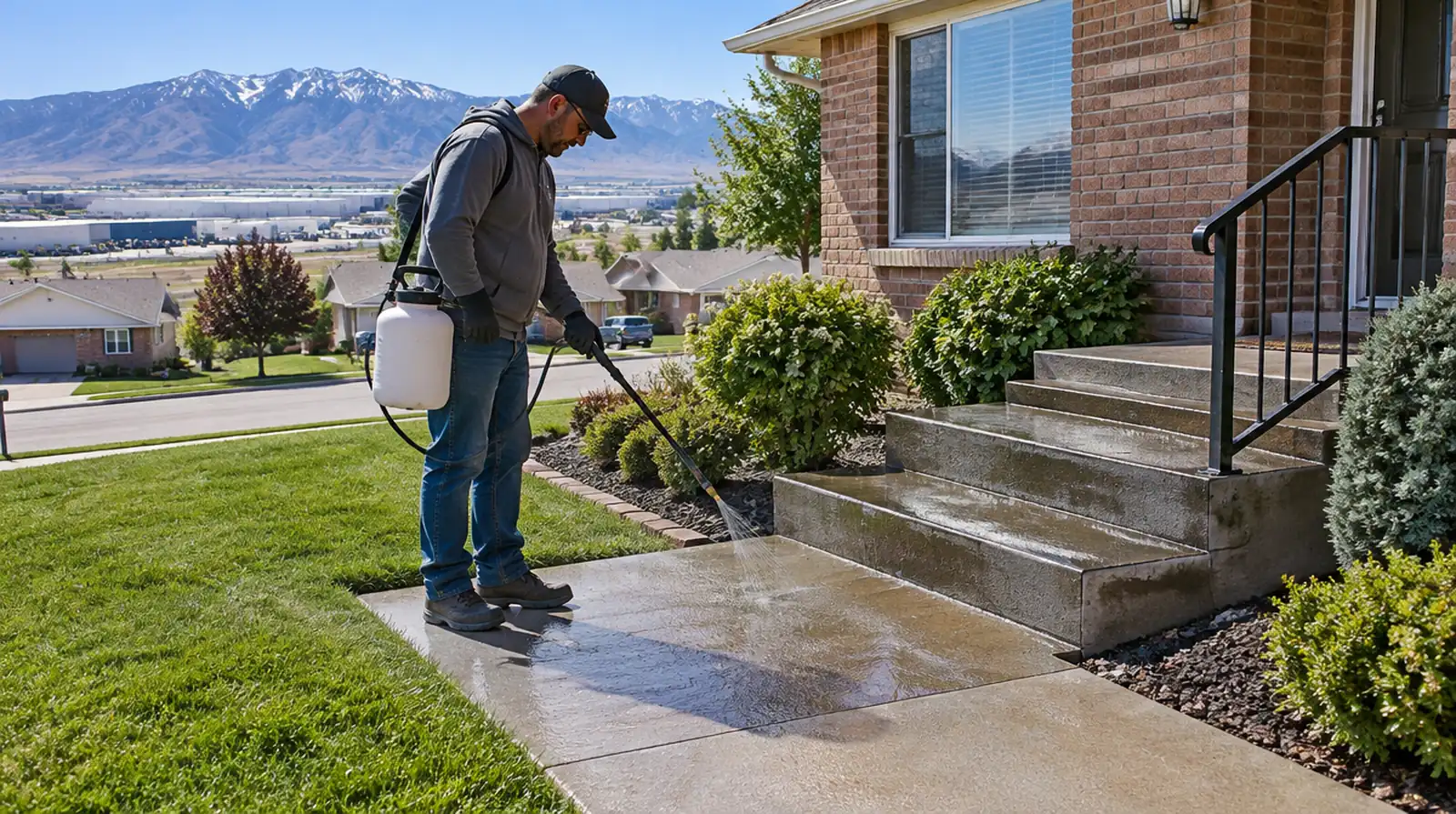
Front steps and walks take the most salt in winter. A penetrating sealer helps them resist scaling without making them slippery.
Patios and stamped concrete
Stamped and colored patios fade and lose their sheen. A UV-resistant topical sealer restores color and protects the surface. We can add grit for traction.
Pool decks
Pool decks need slip resistance and protection from pool chemicals. We use sealers suited for wet areas and add texture as needed.
Preparation
We clean with pressure washing and degreasers, remove old sealers if they are peeling and repair cracks and spalls before sealing.
When to reseal
Penetrating sealers last several years. Topical sealers usually need refreshing every two to three years depending on traffic and sun. Splash water on the surface; if it soaks in quickly, it is time to reseal.
Timing
We seal when temperatures and weather allow proper curing, usually late spring through early fall.
Protecting your landscaping
We cover plants and siding and control overspray so it stays where it belongs.
Sprinklers and hard water
Lawn sprinklers hit patios, walks and driveways all summer. The minerals in the water leave white rings and haze on concrete. Cleaning removes them, and a sealer makes it harder for new deposits to stick, so rinsing is enough to keep the surface clean.
Signs it is time to seal
Splash water on your concrete. If it darkens and soaks in within a minute, the surface is absorbing water. Other signs include fading color, white crust after winter, small flakes appearing on steps and stains that spread instead of staying on the surface.
Choosing the right product
Steps and walks usually get a penetrating sealer for traction. Stamped patios usually get a UV-resistant topical sealer for color. Driveways may get either, depending on stains and appearance goals. We explain each choice in your quote.
Garage aprons and side yards
The apron outside the garage door and narrow side yards often get overlooked, but they collect salt, runoff and dirt. Including them in a sealing project protects the whole property and gives everything a consistent look.
Care after sealing
Keep foot traffic off for a few hours and vehicles off for a day or two. Sweep regularly and rinse salt in winter.
Commercial walkways
Businesses, churches and apartment complexes have long runs of sidewalk, entry plazas and steps that see heavy foot traffic and a lot of deicer. Sealing those surfaces reduces scaling and trip hazards, keeps entries looking cared for and stretches the time between costly repairs. We can schedule commercial sealing on weekends or early mornings to stay out of the way of customers and residents.
Have a mix of surfaces? Send a few photos of the patio, steps and walks, and we will suggest which sealer suits each one before the visit. That way the estimate is quick and you already know what to expect when the written quote arrives.
Protect your concrete
Call (435) 246-7132 for a free estimate.