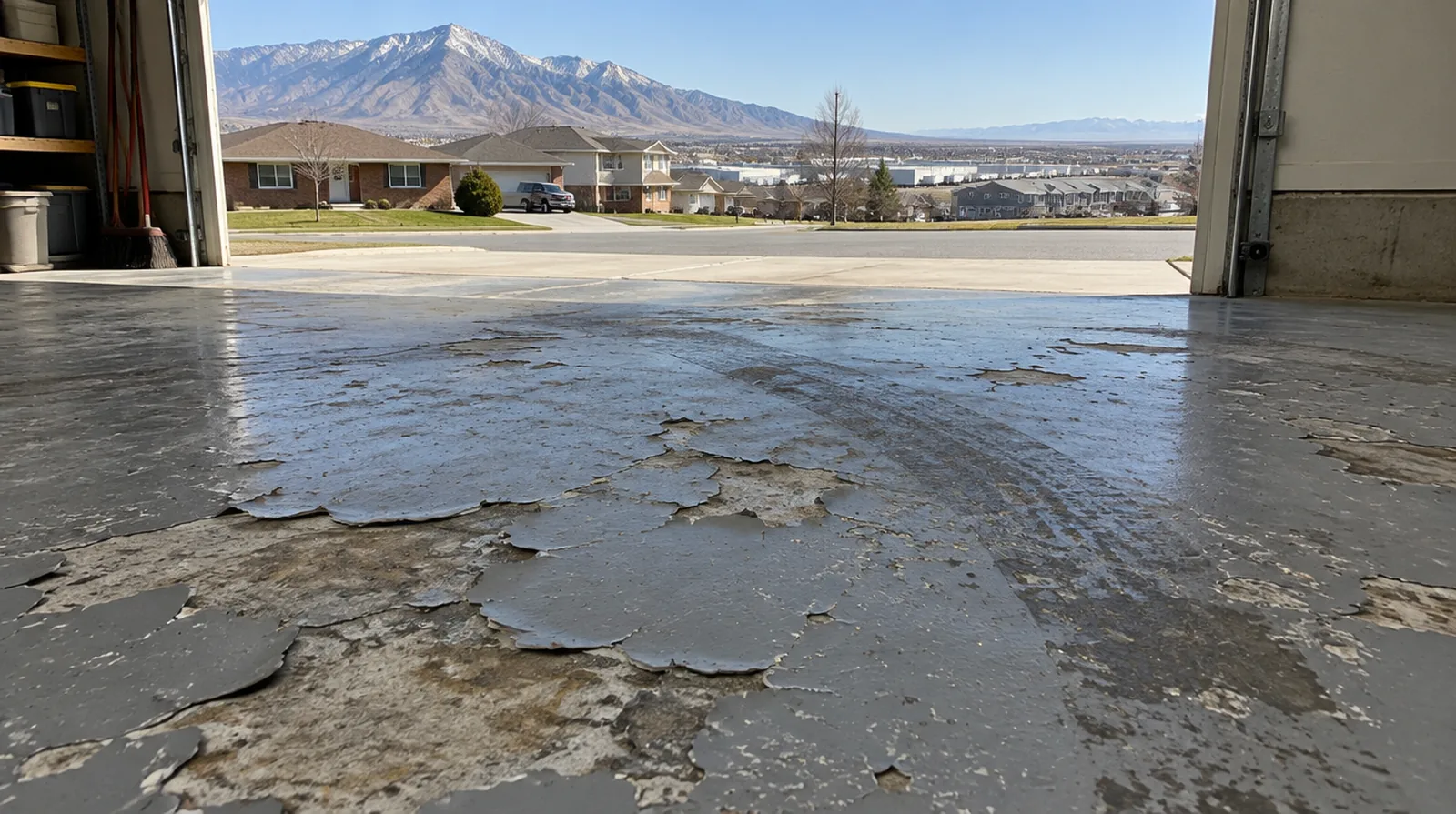
Why coatings fail
Most coating failures come from poor preparation. Acid etching instead of grinding, coating over old paint or sealer, applying on a damp slab or using thin water-based kits all lead to peeling. Hot tires, road salt and heavy loads speed up the failure.
Common problems we see
We see porch paint rolled on decades ago now peeling in sheets, DIY kits lifting in tire paths, chips from dropped tools, bubbles from moisture and yellowed epoxy near garage doors. In shops, we see worn areas under lifts and around workbenches.
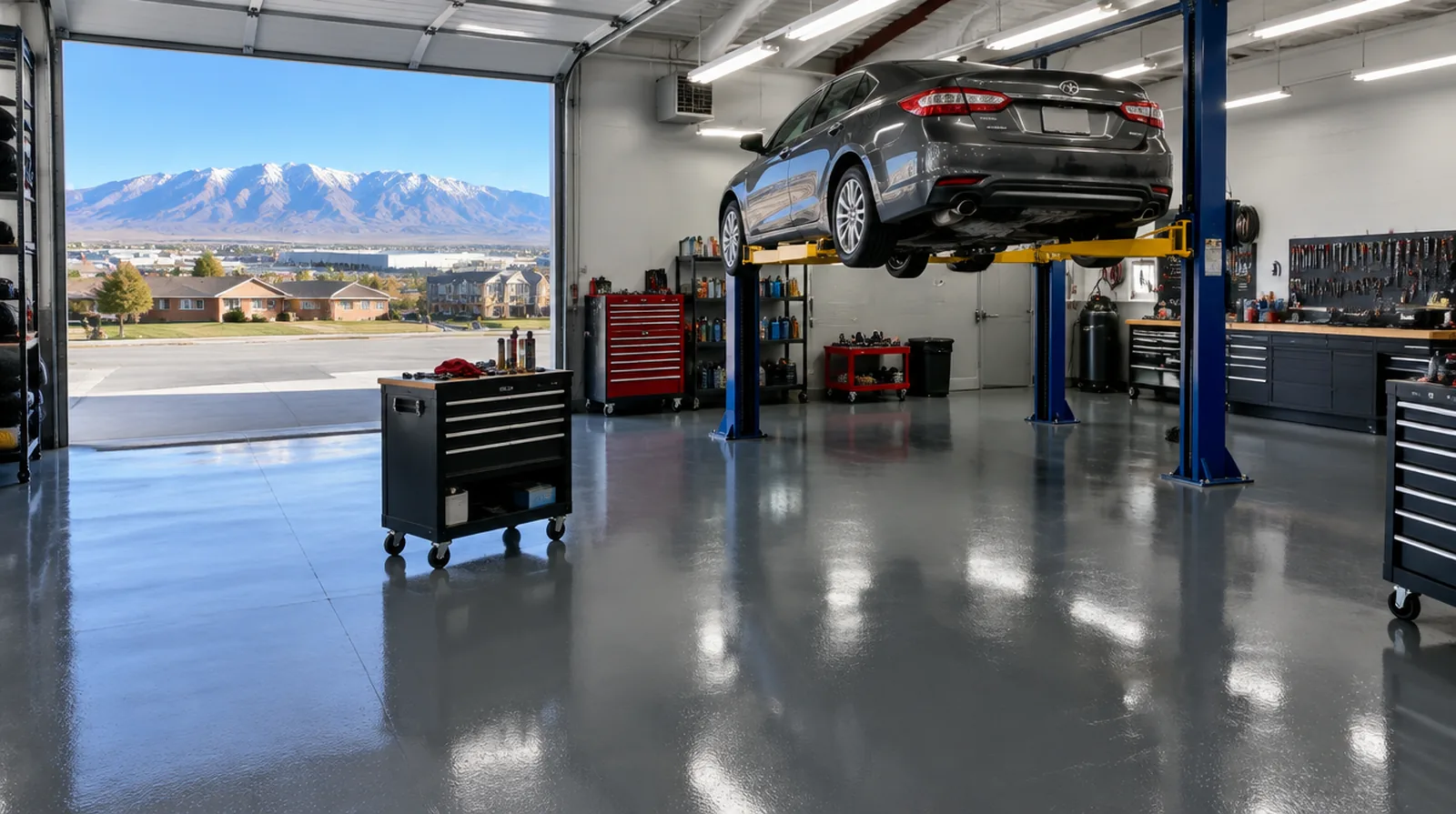
Spot repair versus full replacement
Small chips and isolated damage can be repaired by grinding the area, filling and recoating. When peeling is widespread, the bond has failed across the floor and full removal is the better choice. We tap the coating, test adhesion and explain what we find.
Removing old coatings
We use diamond grinders with dust collection to remove old paint, epoxy and sealers. In some cases, we use shot blasting or scraping for thick layers. Once the slab is clean, we repair damage and install a new system.
Moisture problems
If moisture caused the failure, we test the slab and use a vapor barrier primer before recoating. Without that step, the new coating would fail the same way.
Hot tire damage
Hot tire pickup leaves bare spots in tire paths. Repairs require grinding the area and installing a coating rated for hot tires.
Matching colors
Exact color matches on old floors can be difficult because of fading and wear. For visible areas, we often recommend a new topcoat over the whole floor after repairs for a uniform look.
Commercial repairs
In shops and warehouses, coatings wear at doorways, loading areas and under heavy equipment. We repair those zones after hours so work continues.
Getting an assessment
Send photos of the damage and the age of the coating, and we can give you an early idea of whether a repair or replacement makes sense.
Cracks under coatings
Sometimes a crack in the slab telegraphs through the coating and splits it. We cut out the coating along the crack, fill it with a flexible or rigid filler depending on movement and recoat the area so the repair blends in.
Floors with old oil
Garages and shops with decades of oil soaked into the concrete can push coatings off from below. We grind deeper in stained areas and use oil-tolerant primers so the new coating bonds properly.
What happens at the visit
We look at the failure pattern, tap the coating to find loose areas, test moisture and take photos. You get a written estimate covering spot repair, partial replacement or full replacement, along with our recommendation and the reasons behind it.
Preventing future failures
After a repair, we share care tips such as using mats under hot tires in summer, rinsing salt in winter and avoiding harsh solvents, so the new floor lasts.
Basement floor problems
Basement coatings sometimes bubble or peel because moisture moves up through the slab. We test the slab, remove the failed coating and install a moisture-tolerant primer and a new finish so the basement stays dry and clean underfoot.
Damage spreading? The sooner a peeling coating is addressed, the smaller the repair tends to be. Loose edges catch tires and boots and lift more of the floor each week, so calling early often saves money and time in the end.
Fix a failing floor
Call (435) 246-7132 for a free estimate.