What older garage slabs look like
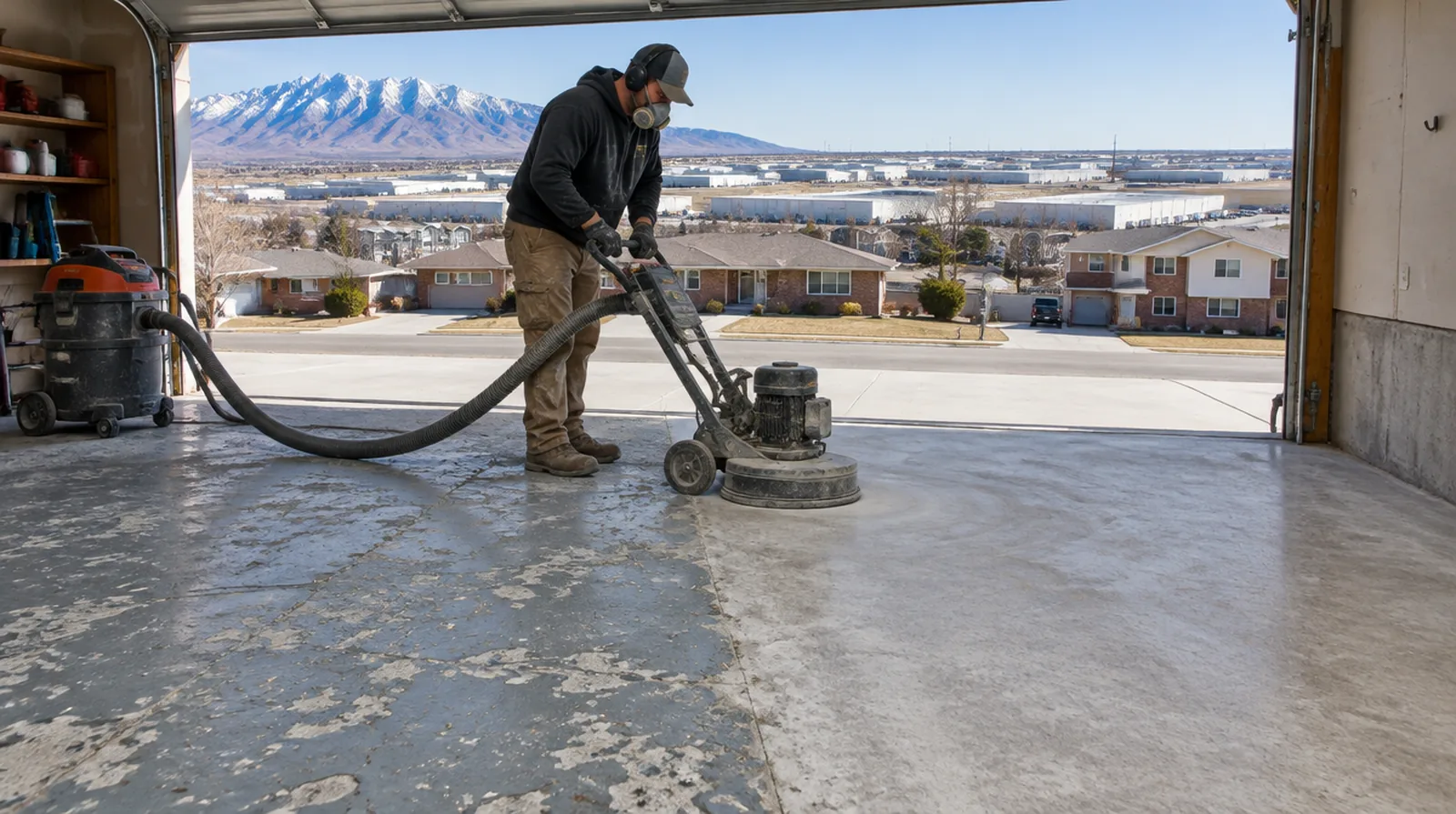
Garages built decades ago have been through a lot. You might see oil spots that never fully came out, scaling near the door where salt and freeze-thaw cycles broke the surface, cracks that were patched with mismatched material and old porch paint that peels whenever a hot tire rolls over it. None of that is a dead end. A full grind removes the paint and the weak surface layer, and repair mortars fill the damage before we coat.
What newer slabs need
Concrete in newer townhomes and infill houses is smooth and dense. It looks like it should take a coating easily, but the hard troweled surface and curing compounds keep coatings from bonding. Grinding opens it up. We also check moisture, because newer slabs sometimes still release water vapor, which can push coatings off from below.
Our garage system
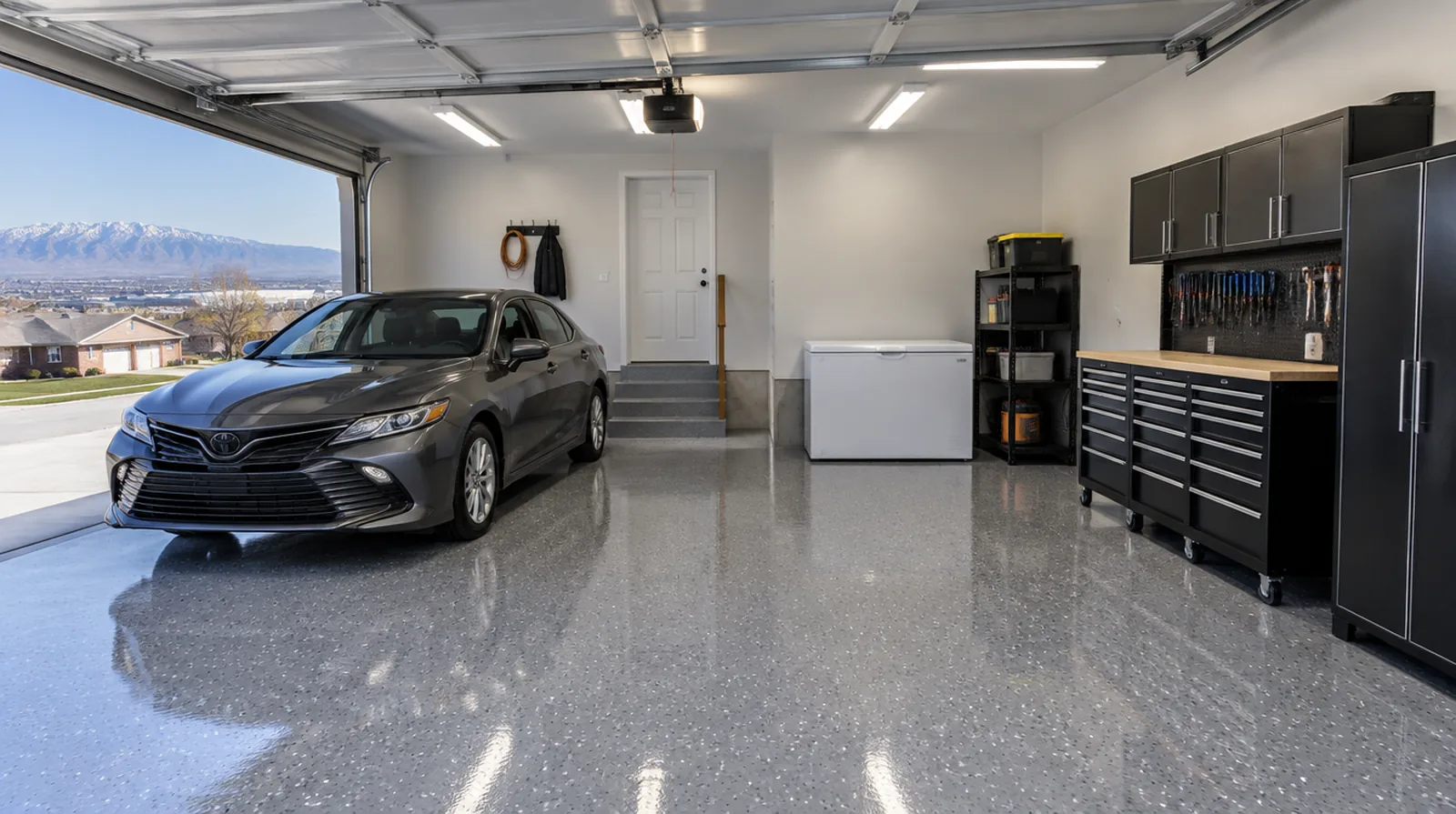
After grinding and repairs, we apply a penetrating base coat that soaks into the concrete and locks to it. Most homeowners choose a full flake broadcast for texture and color. We scrape and vacuum the excess flake, then apply a clear topcoat that seals everything in. The finished floor is many times thicker than a roll-on kit and resists oil, gas, antifreeze, brine and household chemicals.
Road salt and slush
Winter roads are heavily salted, and that brine rides home on your vehicle. On bare concrete it soaks in, dries and pops small flakes off the surface year after year. On a coated floor it stays on top. Push it out the door with a squeegee or rinse it with a hose, and the floor underneath is untouched. Textured finishes keep the surface grippy even when slush is melting.
Hot tires and heavy trucks
Work trucks and full-size pickups are common in local driveways. Hot tires coming off summer asphalt can soften weak coatings and pull them off the floor. We use materials built to handle that heat and weight, and we give you clear cure times so the floor reaches full strength before you park on it.
Garages used as shops
If you fix cars, weld, woodwork or run a small business from your garage, the floor takes extra abuse. We can build a thicker system in work areas, add extra texture where you stand and choose topcoats that resist solvents and brake fluid. Light colors also make it easier to find dropped bolts and see what you are working on.
Color choices
Gray, tan and black flake blends hide dust and tire marks well. Blue, red or custom blends can match a team, a truck or a brand. Solid colors with a light flake give a cleaner look. We bring sample chips so you can see them in your garage light.
Timeline and cure
Most garages are finished in one or two days. Foot traffic is usually fine the next morning, and vehicles can come back after one to several days depending on the system. We confirm the schedule before work starts.
Keeping it clean
Sweep or use a leaf blower for dust, mop with a mild cleaner and rinse brine regularly in winter. Avoid dragging sharp metal across the floor, and use pads under jack stands.
Rental properties
Landlords and property managers like coated garage floors because they survive tenant turnover. Stains wipe off, the floor photographs well for listings and there is no peeling paint to touch up between leases.
Get your garage floor quote
Call (435) 246-7132 for a free estimate.