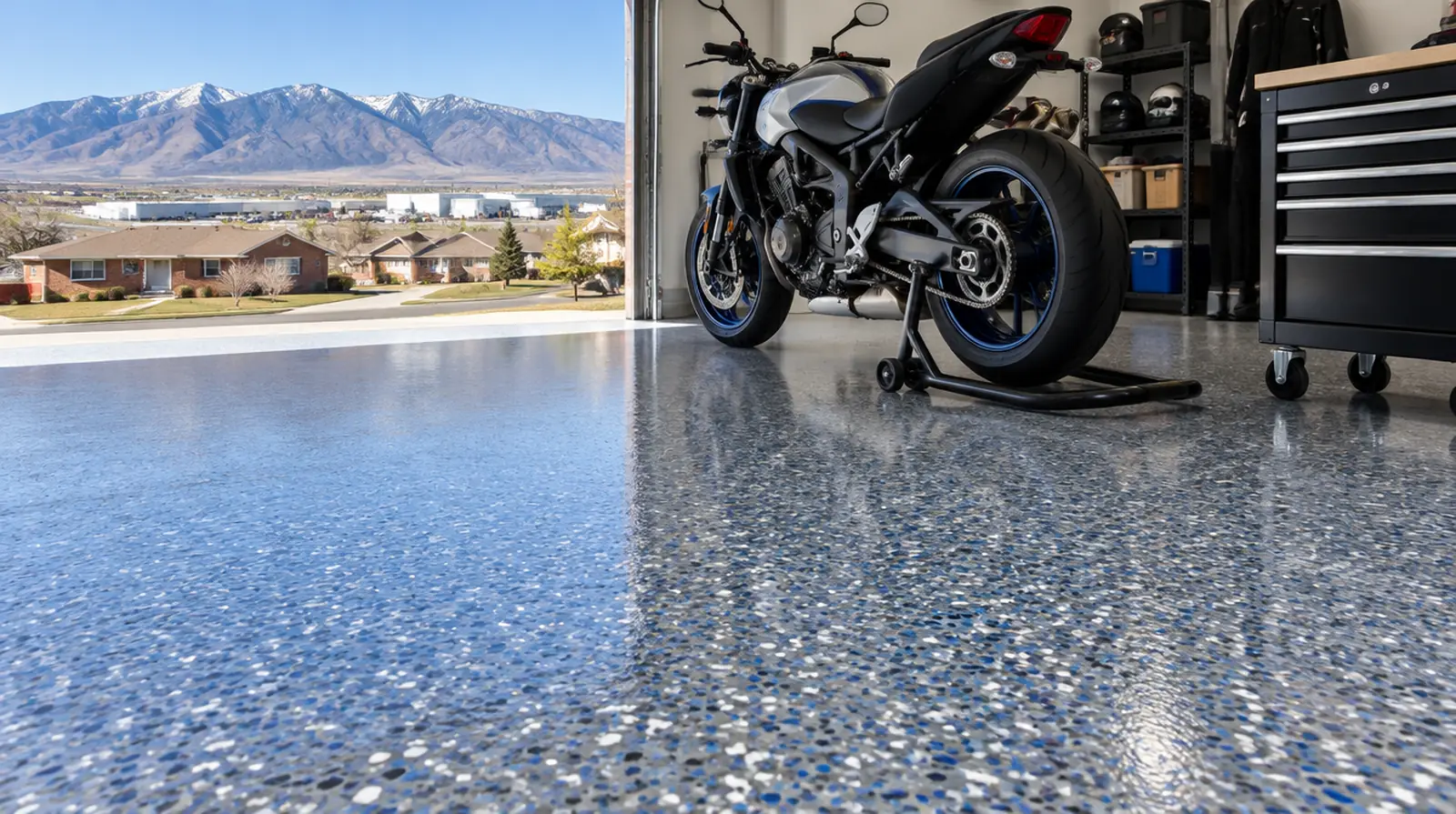
What a flake floor is
A flake floor starts with a pigmented base coat applied to ground concrete. While it is still wet, we throw colored vinyl chips across the whole surface until no base coat shows. Once it cures, we scrape off loose chips, vacuum and apply a clear topcoat. The result is a speckled, granite-like floor with a slight texture.
Why it works so well in garages
The random pattern hides dust, sand, tire marks and small scuffs between cleanings. The texture adds grip when snow and slush melt off your vehicle. The multiple layers create a thick, tough coating that resists dropped tools and dragged equipment. For busy households with trucks, bikes and kids, it is hard to beat.
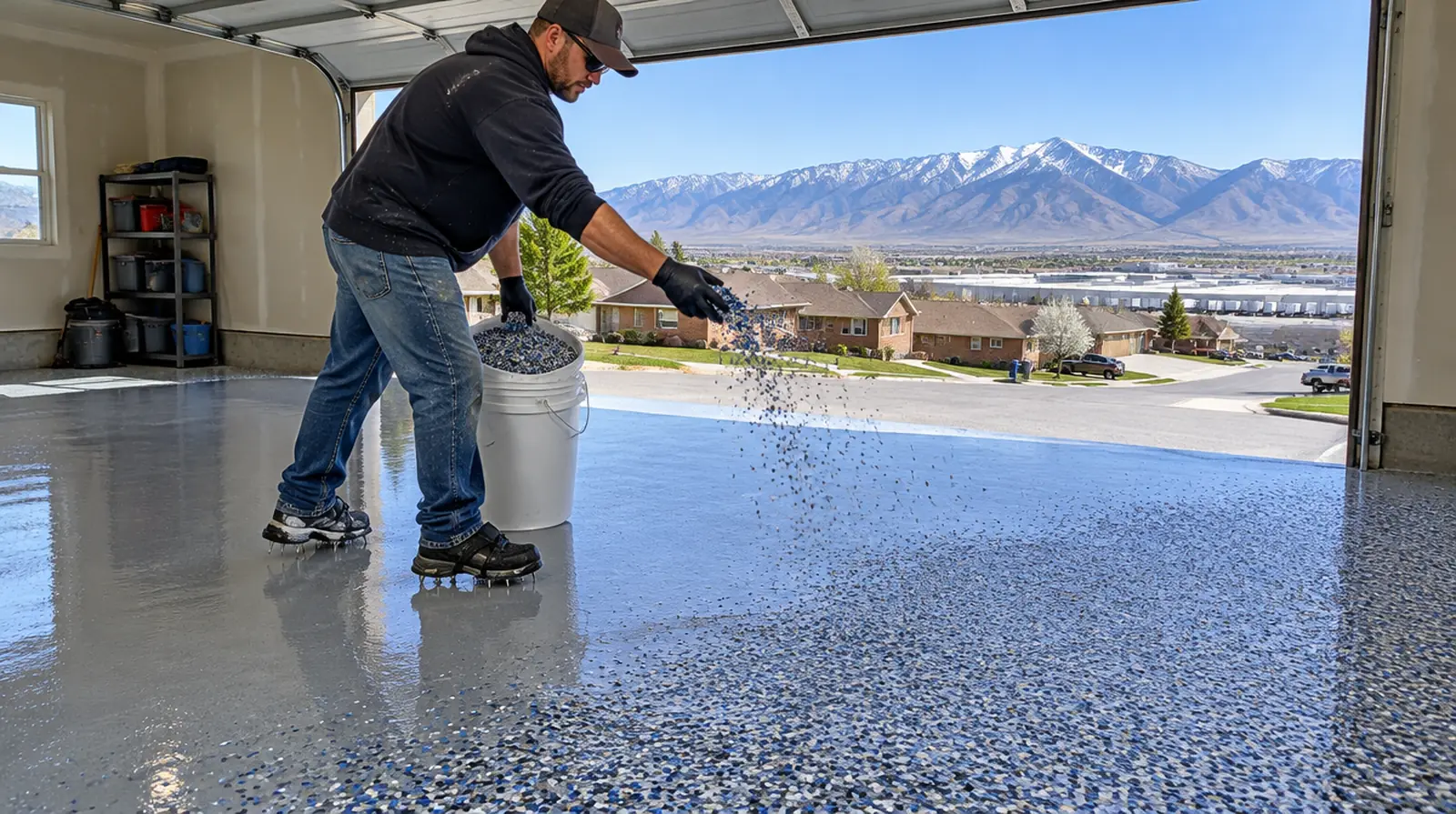
Choosing chip size and blend
Chips come in several sizes. Larger chips give a bold, speckled look. Smaller chips create a finer, stone-like pattern. Blends range from neutral grays and tans to blues, reds and custom mixes. Many homeowners pick colors that coordinate with brick exteriors or garage cabinets. We bring sample boards so you can compare blends in your own light.
Texture and slip resistance
Flake floors have a natural texture. We can adjust it by changing the topcoat thickness. A thinner topcoat leaves more texture for traction, which helps near the door and steps. A thicker topcoat gives a smoother feel that is easier to mop. We talk through how you use the space and choose the right balance.
Durability under real use
Garages here handle work trucks, lawn equipment, snow blowers and heavy storage. A full-broadcast flake system holds up to all of it. The chips add body to the coating, and the topcoat resists oil, brine and household chemicals. Small scratches tend to disappear into the pattern instead of standing out.
Beyond the garage
Flake systems work in laundry rooms, mudrooms, basement storage areas, workshops, gyms, locker rooms and commercial break rooms. Anywhere you want a seamless, cleanable floor with some texture, flake is a strong option.
Stem walls and steps
We can carry the flake up the short concrete stem walls around the garage and onto the steps into the house. That wraparound finish looks complete and protects edges where dirt and brine collect.
Installation timeline
Most flake floors take one to two days. We grind and repair on the first day, apply the base coat and flake, then topcoat. With polyaspartic topcoats, the floor can often handle foot traffic the next morning. Vehicles usually return a few days later.
Long-term care
Sweep or blow out dust, mop with a neutral cleaner and rinse salt in winter. The topcoat can be refreshed down the road if the floor sees heavy wear.
Matching an older home
Brick ramblers and split-levels often have warm red, tan or brown exteriors. Flake blends with tan, brown and gray chips tie the garage to the rest of the house, while cooler gray and white blends give a cleaner, updated look. We hold sample boards against your walls and cabinets so you can see which direction feels right. Many owners also like a slightly darker blend near the door, where salt and grime are heaviest, because it hides wear between cleanings.
Questions to ask any installer
Ask whether they grind or etch, how thick the base coat is, whether the flake is full broadcast and what topcoat they use. Those answers tell you more about how long a floor will last than the price alone.
Pick your flake colors
Call (435) 246-7132 for a free estimate.