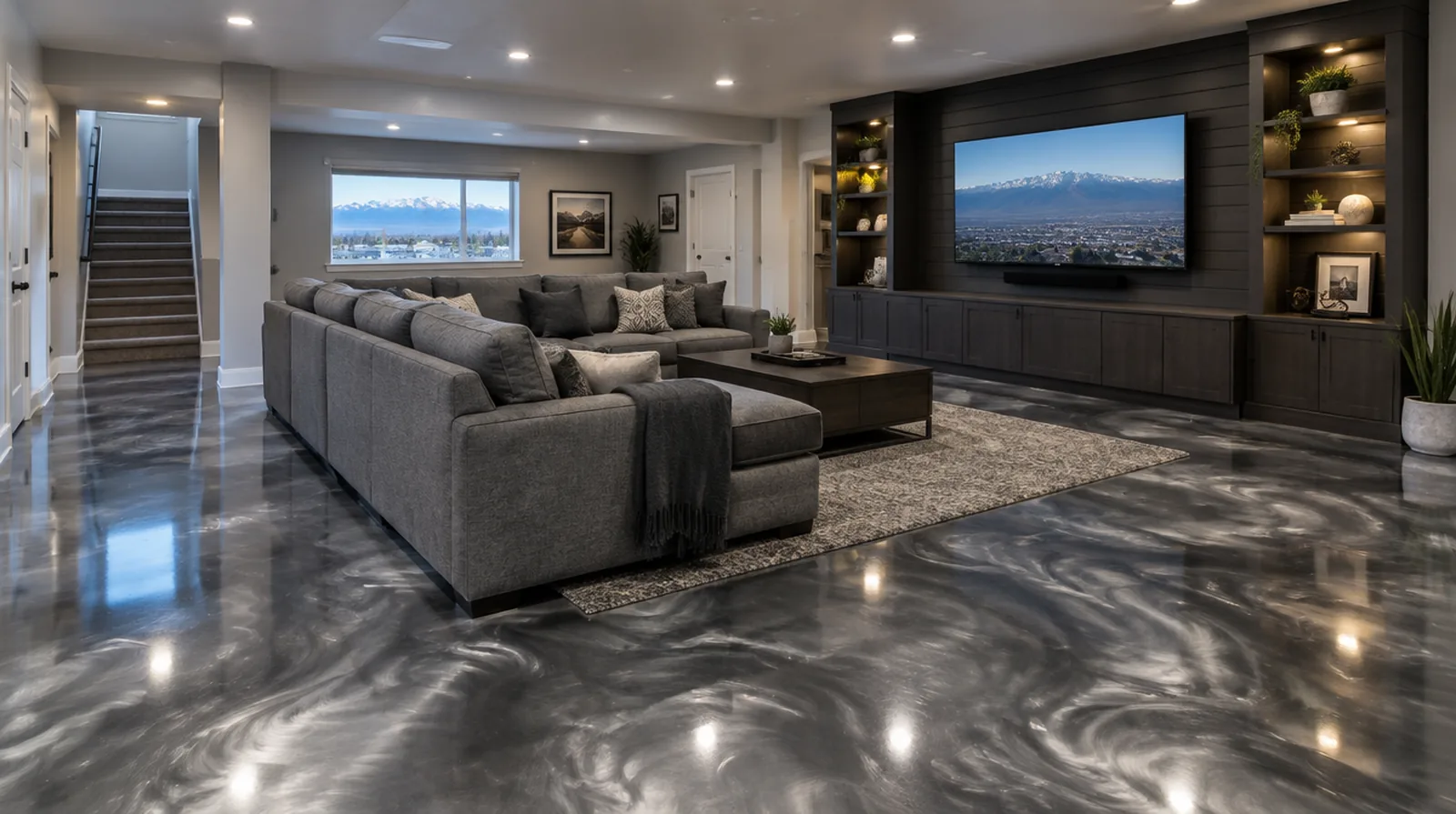
How metallic floors are made
Metallic epoxy uses fine mica pigments suspended in a clear resin. As we roll, brush and manipulate the material, the pigments shift and settle, creating swirls, ripples and depth that look like polished stone or liquid metal. Every floor is unique because the pattern is created by hand on site.
Basements in older homes
Many local split-levels and ramblers have basements with dated carpet or vinyl over concrete. Basements can trap moisture, and carpet holds odors. A metallic floor gives the space a modern, finished look that is easy to clean and does not mind the occasional spill or wet boot. We test moisture first, because basement slabs need a vapor barrier primer when readings are high.
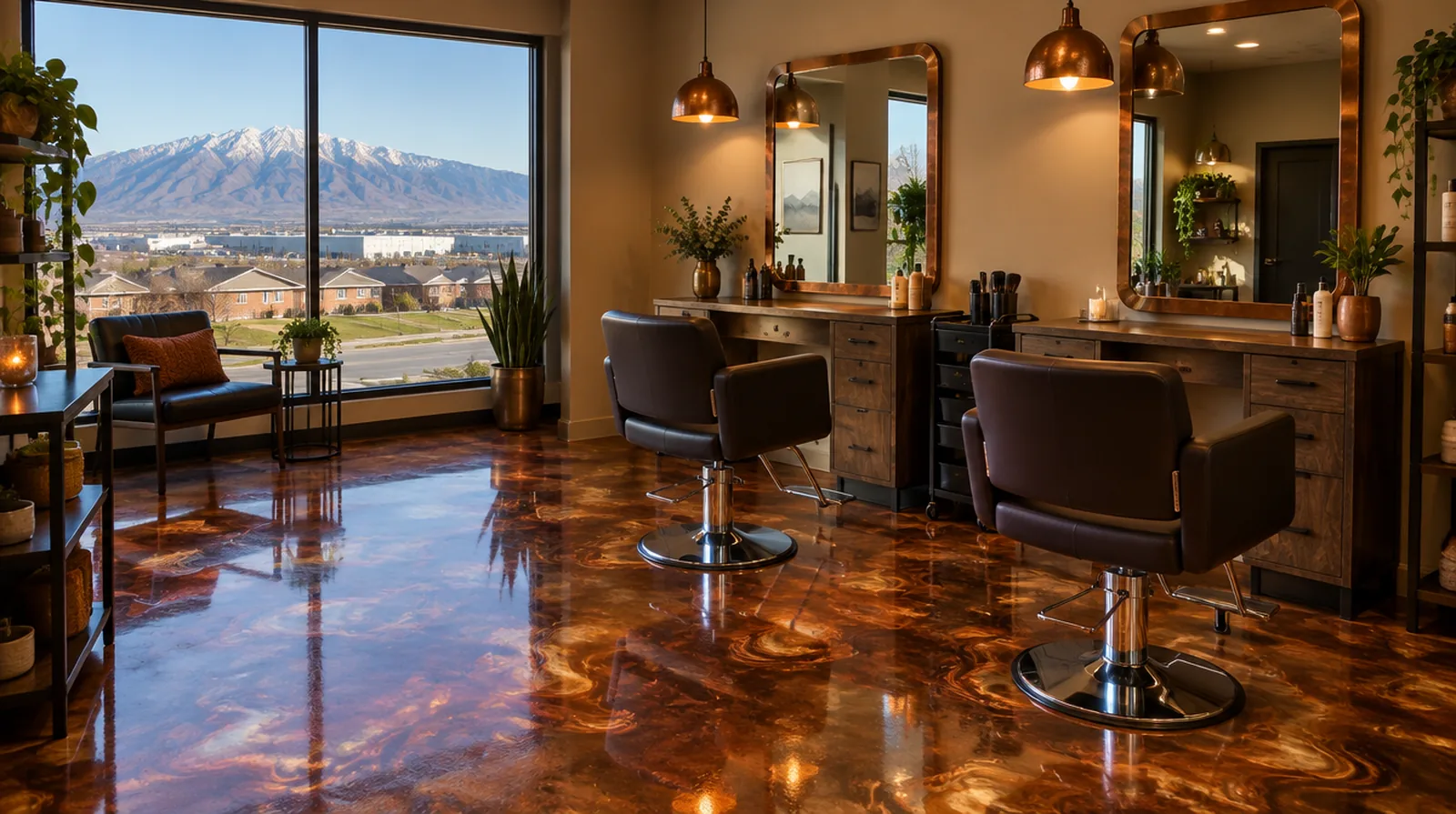
Businesses that want to stand out
Salons, barbershops, boutiques, restaurants, car dealerships and tattoo studios all use metallic floors to make an impression. The floor becomes part of the decor. It reflects light, brightens the space and cleans easily between customers.
Choosing colors
Popular combinations include silver with charcoal, copper with bronze, blue with pearl and white with gray. We can blend two or three colors for more movement. Darker bases show more depth, while lighter bases feel bright and open. We bring physical samples so you can see how the colors change under your lighting.
Lighting changes the look
Metallic floors react to light. Recessed lights, natural light through windows and LED strips all bring out different patterns. We look at your lighting during the estimate and suggest colors that will look best in the room.
Durability and topcoats
We finish metallic floors with a clear urethane or polyaspartic topcoat that resists scratches and stains and protects the color from sunlight. In busy commercial spaces, we may recommend a satin topcoat that hides fine scratches better than high gloss.
Preparation and moisture
Metallic floors show every flaw in the slab, so preparation is critical. We grind, fill cracks and patch holes before the base coat. Moisture testing tells us whether a vapor barrier primer is needed.
What installation looks like
Most metallic floors take two to three days, including prep, primer, the metallic coat and topcoat. Furniture can usually return after a few days.
Care
Dust mop daily in busy spaces, damp mop with a neutral cleaner and use felt pads under furniture legs.
Comfort underfoot
Concrete can feel cold in a basement. Area rugs, radiant heat mats or a good subfloor heater make a metallic room comfortable through winter. The floor itself stays easy to clean, and rugs can be moved or swapped whenever you like.
Showrooms and dealerships
Vehicle showrooms, furniture stores and display spaces use metallic floors to frame products. The reflective finish catches light and draws the eye, and the topcoat handles tires, carts and constant foot traffic without dulling quickly.
Planning the room
Before the pour, we talk about where furniture will sit, where foot traffic flows and where the light comes in. Those details guide how we move the material, so the most dramatic patterns end up in open areas where people will see them instead of under a sofa. We also plan transitions to stairs, carpeted rooms and doorways so edges look clean and finished. If you are remodeling, we coordinate with your other trades so the floor goes in at the right point in the schedule.
Want ideas? Ask to see photos of past metallic floors in similar rooms, and we will help you narrow down color pairings that suit your space and lighting.
Design a metallic floor
Call (435) 246-7132 for a free estimate.